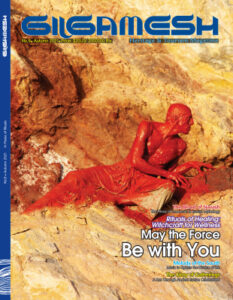
The tenth issue of Gilgamesh International, the English-language quarterly magazine dedicated to Iran’s heritage and tourism, is a 148-page issue with “Restoration of Historical Buildings” as its central theme. Following an approximately five-year hiatus in the publication of its English edition, Gilgamesh once again invites international readers on a journey through Iran’s history, culture, art, architecture, and nature—from Lake Urmia and Iran’s ancient trees to rock-hewn villages, lesser-known museums, World Heritage sites, mythology, and historic buildings brought back to life through new uses. This issue’s special feature, “Restoration of Historical Buildings,” explores examples of restoration and adaptive reuse across Iran. The feature examines how historic houses, caravanserais, baths, and other heritage structures can be preserved while meeting contemporary needs and creating meaningful visitor experiences. Among the projects featured are Hanna Boutique Hotel in Tehran, Haft Peykar in Gorgan, Akhavi House in Kashan, Green Mansion in Bushehr, Darb-e Shazdeh Boutique Hotel in Shiraz, Pardis Ardakan Historical Accommodation Complex, Zein-o-din Caravanserai in Mehriz, Saad al-Saltaneh Caravanserai in Qazvin, Laleh Bistoun Five-Star Caravanserai Hotel in Kermanshah, the Tabriz Islamic Art University Campus, Mehr Sarai of Arak Historical Bazaar, Gap Bath in Khorramabad, and Esfahak Village. Together, these examples explore how to preserve architectural authenticity while connecting historic places with contemporary life and tourism. In Geography, “A Symphony of Nature and Heritage” explores Lake Urmia through its natural, historical, and spiritual dimensions.
Meanwhile, “Ancient Trees of Iran” introduces some of Iran’s remarkable living natural and cultural treasures. The Iranology section looks at the long and evolving relationship between Iran and France, followed by an account of Iran–Italy political relations. In Lifestyle, a comprehensive feature on Film Tourism examines the relationship between cinema, destinations, destination branding, technology, and travel behavior, with particular attention to Iran’s largely untapped potential. The section then takes readers to the high-altitude world of Mount Sabalan, through the firsthand account of a Brazilian traveler. Graball presents a selection of recent and significant developments in Iranian heritage, including Iran’s World Heritage and Life Within the Rocks: The Global Village of Kandovan, introducing the remarkable rock-hewn village and its continuing traditional life. The Art section features Eye to Eye, an exhibition of more than 120 Iranian and international works from the Tehran Museum of Contemporary Art collection that examines the evolution of portraiture in modern and contemporary art. It is followed by From the Heart of History to the World of Art, introducing the Adel Yazdi House-Gallery in Shiraz, where historic architecture and contemporary Iranian art meet.
In Mythology, “Dwelling, Identity and Myth” explores the concept of the house and settlement in the ancient Iranian worldview. At the same time, “Enemy, Drought, and Lie” investigates the linguistic, mythological, and cultural connections between these three concepts in ancient Iranian thought. The Environment section presents 13 nature trails across Iran, taking travelers from high mountains and alpine lakes to canyons and deserts, including Damavand, Alam Kuh, Sabalan, Lake Gahar, Lake Dalamper, Reghez Canyon, and routes through the Lut and Kavir deserts. Finally, the History section travels from the prehistoric world of Sialk, one of the oldest settlements of the Iranian Plateau and a site associated with early agriculture, metallurgy, urbanization, and writing, to Haraskan, a lost city whose archaeological and epigraphic evidence has helped reveal its identity. The section concludes with the WWII Vanguard Museum of Lahijan, a lesser-known museum documenting World War II and Iran’s often-overlooked role in the conflict through artifacts, documents, and historical narratives. With its focus on a central theme and its combination of research, storytelling, photography, and visual material, Gilgamesh International No. 10 continues to present Iran’s heritage and tourism from multiple perspectives. This time, its central story is one of restoration, renewal, and giving historic places a new life in the contemporary world. Gilgamesh — From the backwoods to the well-traveled road. For more information about Gilgamesh International: www.gilgameshmag.com